

Electrical Installation
Electrical Installations to BS 7671 & I.S. 10101
(Eighteenth Edition IET Wiring Regulations & Fifth Edition NSAI Wiring Rules)
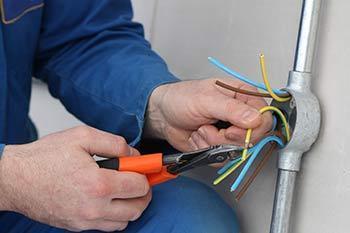
We at Walsh Electrical Services carry out electrical installations of whatever scale and complexity to both the IET Wiring Regulations (also known as the IEE Wiring Regulations) and to the NSAI National Rules for Electrical Installations. Work in the north, e.g. in Derry, is carried out in accordance with BS 7671:2018 (2024) – the IEE Wiring Regulations – and work in the south, e.g. in Buncrana (including both Controlled Works and Restricted Works) is fully compliant with I.S. 10101:2020+A1:2024/AC2:2025 – Ireland’s National Wiring Rules. We can optimise installations for Day/Night tariffs (such as Economy 7) or for 24-hour tariffs.
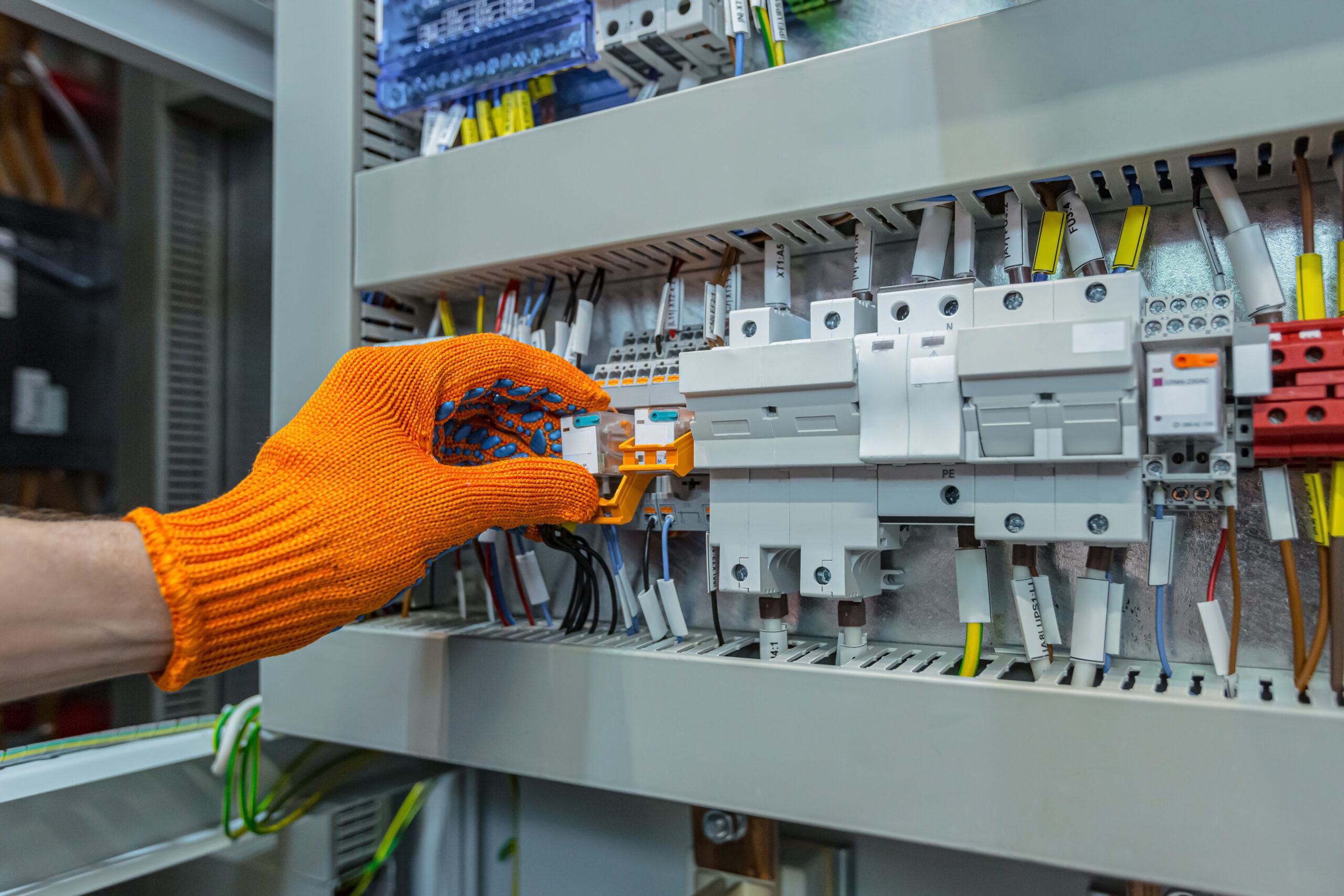
Please note that we must verify that the earthing and bonding arrangements for your installation are adequate for any alterations or additions to your electrical installation in your business or your home (no matter how small). If they are inadequate then this must be rectified as part of the work as these are essential for safety. We can also liaise with the Distribution Network Operator (DNO) or Distribution System Operator (DSO) as appropriate.
We are insured on both sides of the border, fully qualified and regularly assessed by the NICEIC (National Inspection Council for Electrical Installation Contracting) in the north as part of our enrolment in the Approved Contractor Scheme and ECA Contractor Scheme, and routinely inspected by RECI (the Register of Electrical Contractors of Ireland) in the south as part of our registration with the Safe Electric Scheme.
Electrical rewires in Derry & Donegal
All electrical installations deteriorate with age regardless as to how well they were originally constructed. This is true regardless of whether the electrical installation is in a workplace (Industrial or Commercial (Non-Domestic)) or whether it is in household (Domestic) premises.
Should you require either full or partial rewiring then we can carry this out to meet your needs, and in full compliance with the relevant Wiring Rules/Regulations.
Rewiring may also require the involvement of the DSO or DNO (i.e. ESB or NIE). We can advise on this where necessary
Please be aware that Volume 2 of Technical Guidance Document B to the Building Regulations 2017 issued by An Roinn Tithíochta, Pleanála, Pobail agus Rialtais Áitiúil (the Department of Housing, Planning, Community and Local Government) requires houses in the 26-Counties to have (at a minimum) a fire detection and alarm system meeting the definition of a Grade D, Category LD2 system as per I.S. 3218:2024.
Therefore you will be required to install detectors in at least each of the following locations:
- All circulation areas that form part of an escape route within the dwelling, and
- All high fire risk areas/rooms e.g. kitchen, living rooms, garages, utility rooms and
- All bedrooms.
Smaller works such as additional lighting or socket-outlets, garden lighting or the installation of smoke and/or carbon monoxide detectors – or larger jobs including additional circuits (e.g. for an electric shower), or wiring for a new kitchen can also be delivered to the highest standard.
Can Work Carried Out By Others Be Certified?
This is strictly prohibited — and the prohibition also extends to any private work carried out by employees of a Registered Electrical Contractor (REC). Only the REC's own work may be certified by that REC.
There are two specific exceptions to this:
ESB Networks Reconnections
Reconnections of existing electrical installations which have been de‑energised by the DSO (ESB Networks), in order to facilitate the installation being re‑energised. The installation must be fully compliant with the Wiring Rules valid at the time it was wired. Any new additions must be fully compliant with current Wiring Rules.
Change of Contractor
With written approval from Safe Electric due to a change of contractor. The customer must apply for a "Change of Contractor," and approval must be received prior to any further works and certification.
As stated on the Safe Electric website: using a REC gives confidence to consumers that they are using a contractor who is competent, insured and subject to regular inspection. It is through the registration system that Safe Electric can monitor and validate that electrical works completed meet the required safety standards.
Change of Contractor
If any electrical installation work within the State has already been commenced by another contractor, you will be required to apply to the Electrical Safety Supervisory Body (ESSB) — Safe Electric — for a Change of Contractor, as per the prescribed procedure.
- No work can commence until we have received written approval for this request from the ESSB.
- Once the Change of Contractor procedure is initiated, the installation will in all circumstances also require an inspection by a Safe Electric Inspector before a Completion Certificate can be issued.
- A cost is payable to the ESSB for this inspection — and as we are also required to attend, a fee will also be payable to Walsh Electrical Services.
We (or the client) also have the right to request an additional inspection before works commence. There will be an additional fee for this where such an inspection takes place.
N.B. When filling out the application for a Change of Contractor, should you list the installing contractor as "unknown," the ESSB are liable to initiate the "Report Illegal Works" procedure to facilitate investigations into the identity and registration status of the original installing contractor.
Our installations also comply with other relevant Standards and Regulations.
Electric Vehicle Supply Equipment (EVSE) Installations
We can supply and fit Electric Vehicle Charge Points. Installations are carried out in compliance with BS 7671:2018 (2024) or I.S. 10101:2020+A1:2024 and the IET Code of Practice for Electric Vehicle Charging Equipment Installation. Dynamic load management can also be provided where necessary. The DNO/DSO will be notified of the installation where required.
SEAI Grant
A €300 grant towards the cost can be obtained from the Sustainable Energy Authority of Ireland (SEAI). Visit SEAI for further information about eligibility requirements.
OLEV (OZEV) Grant
As an OLEV (OZEV) Authorised Installer, £350 grants are available from the Office for Low Emission Vehicles (Office for Zero Emission Vehicles).
Electric Vehicle Charging Points in Derry & Donegal!
Distribution Board Replacement in Donegal & Derry
If you need either a new or replacement distribution board — including consumer units and fuseboxes, or three‑phase DBs — with circuit breaker or MCB protection and RCD protection as appropriate, we can do this for you.
SPD (surge arrester) and AFDD (arc fault) protection can also be fitted as required. We strongly recommend the installation of Type 2 Surge Protective Devices (SPDs) in most instances, and in many cases they are obligatory. We use only high quality and reliable parts.
DSO or DNO involvement may be required in addition to our work, depending on the particular installation.
All work is certified upon completion on official NICEIC, ECA or RECI/Safe Electric forms. Initial Verification (inspection, testing & certification of new work) is an absolute requirement of both the IET Wiring Regulations and the ETCI/NSAI National Wiring Rules.
Every electrical installation should also be periodically inspected and tested, and a report on its condition obtained — to identify any damage, deterioration or defects affecting safety, and to enable recommendations for remedial works.
Do not accept a quote from any enterprise which tells you that this is unnecessary, or that it is something they are unable or unwilling to provide.